
Avoid Shipment Rejections and Ensure Smooth Deliveries
Packaging and shipping labels play a critical role in the successful fulfillment of Flipkart orders. Every day, thousands of seller shipments are accepted or rejected at Flipkart and Ekart fulfillment checkpoints based on packaging quality, label visibility, and shipment compliance.
A damaged package, improperly pasted label, faded barcode, or incorrect packaging material can result in shipment rejection, delivery delays, customer dissatisfaction, and additional logistics costs.
This comprehensive guide explains the most common shipment rejection reasons and provides practical packaging and labeling best practices every Flipkart seller should follow.
Why Packaging Compliance Matters
Proper packaging is more than just protecting the product.
Benefits include:
- Faster shipment acceptance
- Reduced order cancellations
- Lower return rates
- Better customer experience
- Improved seller performance metrics
- Reduced damage during transportation
- Faster barcode scanning and sorting
Failure to comply with packaging standards can lead to shipment rejection before the package even enters the delivery network.
Common Flipkart Shipment Rejection Reasons
Based on shipment acceptance checks, the most common rejection reasons are:
- Liquid Damage
- Non-Liquid Package Damage
- NPG (No Packaging) / Paper Wrapping
- Transparent Packaging
- Improper Label Pasting
- Improper Label Printing
- Large Shipment Size
- Plastic Packaging Violation (Applicable for certain regions)
Let’s understand each one in detail.
1. Liquid Damage
What Is Considered Liquid Damage?
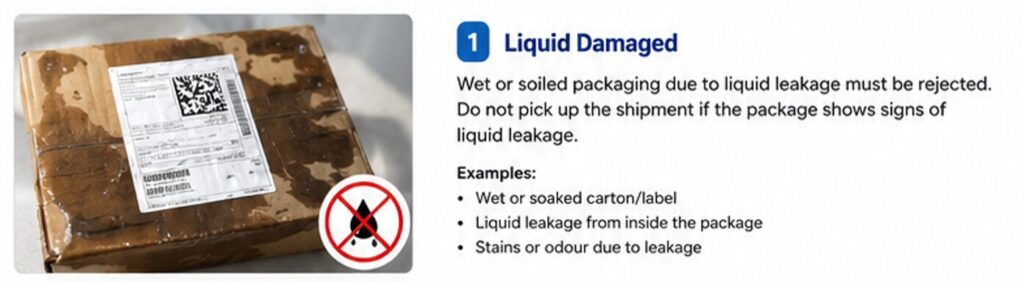
A shipment is rejected if the outer packaging shows signs of:
- Wet surfaces
- Liquid leakage
- Soiled packaging
- Water or chemical stains
- Damaged carton due to liquid exposure
Even if the product inside appears intact, visible leakage can result in shipment rejection.
Best Practices for Liquid Products
Secure the Product
- Tighten bottle caps completely
- Apply LDPE shrink wrap around every bottle
- Use leak-proof seals whenever possible
Choose the Right Carton
| Product Capacity | Recommended Carton |
|---|---|
| Up to 3 Liters | 3-Ply Corrugated Box |
| 3–5 Liters | 5-Ply Corrugated Box |
Add Protective Cushioning
Use:
- Air pillows
- Airbags
- Corrugated fillers
- Paper cushioning
This prevents bottle movement and leakage during transit.
2. Non-Liquid Package Damage
When Is a Package Rejected?
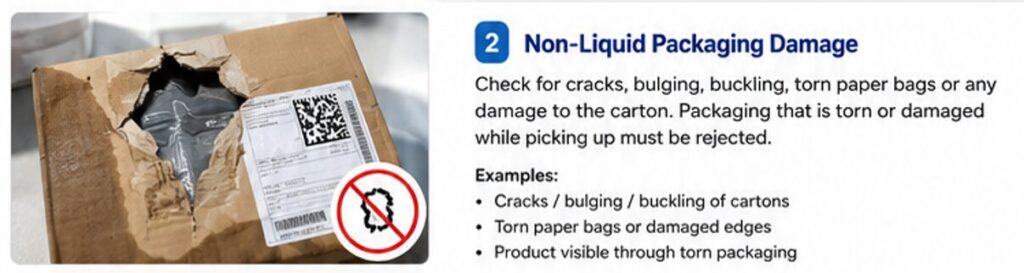
Shipments can be rejected if the packaging has:
- Torn cartons
- Cracks
- Bulging surfaces
- Buckled boxes
- Damaged paper bags
- Exposed products
If the product is visible through damaged packaging, the shipment may not be accepted.
Best Practices
- Use sturdy corrugated cartons
- Avoid reusing damaged boxes
- Reinforce weak corners
- Apply sufficient packaging tape
- Perform a final visual inspection before dispatch
A package should remain structurally intact throughout transportation.
3. NPG (No Packaging) and Paper Wrapping
What Is NPG?
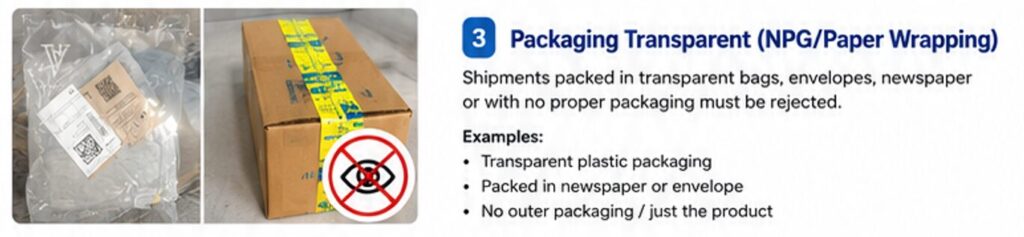
NPG refers to products shipped without proper external packaging.
Examples include:
- Newspaper wrapping
- Paper envelope packaging
- Bare product packaging
- Single paper-layer wrapping
Such packaging provides inadequate protection and may be rejected.
Recommended Packaging
Always use:
- Courier flyer bags
- Corrugated cartons
- Tamper-evident packaging
- Product-specific protective packaging
Never ship products wrapped only in newspaper or thin paper envelopes.
4. Transparent Packaging
Why Transparent Packaging Is Rejected
Products packed in transparent plastic bags expose the contents during transit.
This creates:
- Security risks
- Damage risks
- Customer privacy concerns
- Handling issues
Correct Packaging Method
Use:
- Opaque courier bags
- Branded shipping bags
- Corrugated cartons
- Non-transparent secondary packaging
The product should not be visible from outside the package.
5. Improper Label Pasting
Common Label Placement Mistakes
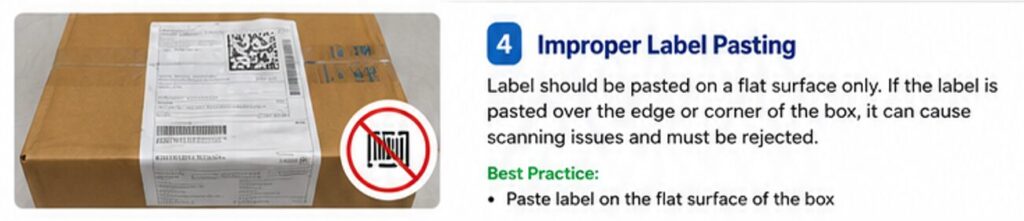
Labels are often rejected when:
- Placed across carton edges
- Wrapped around corners
- Folded during application
- Applied over uneven surfaces
- Covered by tape
These issues create barcode scanning problems.
Correct Label Placement
Paste Labels On
✔ Flat carton surfaces
✔ Smooth courier bag areas
✔ Top or bottom carton faces
Avoid
✘ Box corners
✘ Folded surfaces
✘ Package edges
✘ Damaged packaging areas
A properly pasted label should lie completely flat and remain easily scannable.
6. Improper Label Printing
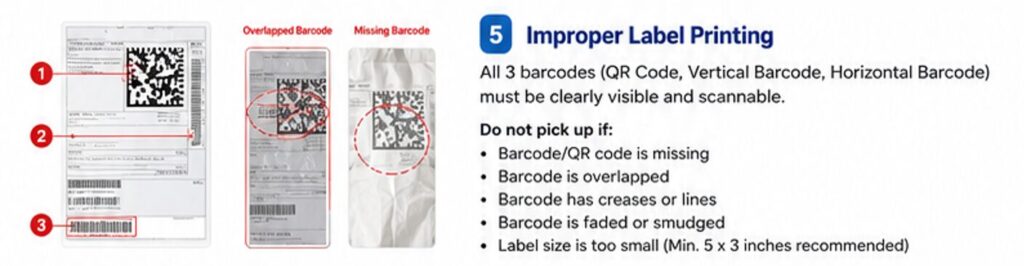
Shipping labels must be printed clearly and completely.
Ensure All Barcodes Are Visible
A shipping label generally contains:
- QR Code
- Vertical Barcode
- Horizontal Barcode
If any barcode is missing, hidden, or partially printed, the shipment may be rejected.
Checklist
✔ QR code visible
✔ Vertical barcode visible
✔ Horizontal barcode visible
✔ All codes scannable
Avoid Barcode Creases and Lines
Labels should not have:
- Folding marks
- Deep creases
- Scratches
- Printing streaks
These defects prevent successful barcode scanning.
Avoid Faded or Smudged Printing
Barcodes become unreadable when:
- Ink fades
- Thermal printing quality is poor
- Labels become wet
- Printing is blurred
Use high-quality thermal printers and good-quality labels.
Use Correct Label Size
Very small labels can create scanning difficulties.
Recommended Label Size
5 inches × 3 inches
Smaller labels may cause barcode readability issues and increase rejection risk.
7. Large Shipment Guidelines
What Is Considered a Large Shipment?
Large products that cannot fit properly into standard logistics handling systems may be rejected.
Examples include:
- Large suitcases
- Trolley bags
- Oversized products
- Bulky packages
Best Practices
- Check Flipkart size restrictions before dispatch
- Use category-approved packaging
- Ensure proper weight distribution
- Apply additional reinforcement for heavy products
Oversized shipments should be packed according to Flipkart’s dimensional guidelines.
8. Plastic Packaging Restrictions
Special Packaging Instructions
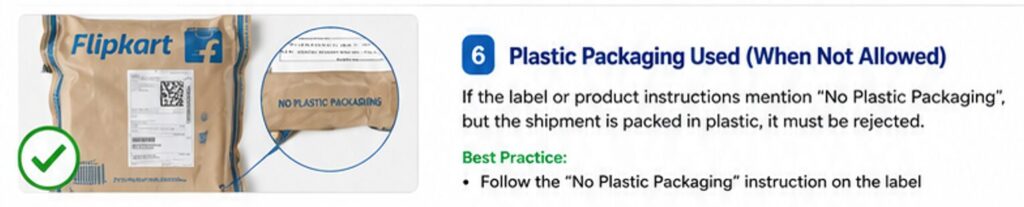
Certain shipments include instructions such as:
“No Plastic Packaging”
If such instructions are printed on the shipping label, sellers must comply.
Acceptable Alternatives
Use:
- Paper-based courier bags
- Eco-friendly packaging
- Corrugated cartons
- Recyclable paper packaging
Non-Compliant Packaging
Do not use:
- Plastic courier bags
- Transparent plastic wrapping
- Plastic outer packaging
Failure to follow packaging instructions may result in shipment rejection.
Best Practices for Sealing Packages
Before dispatch:
Insert Documentation
Include:
- Invoice
- Product documentation
- Warranty card (if applicable)
Apply Cross Taping
Seal cartons using:
- Transparent BOPP tape
- Branded packaging tape
Apply tape in a cross pattern for maximum strength.
Use Fragile Tape
For breakable items:
- Apply red fragile tape
- Mark handling instructions clearly
This improves handling during transportation.
Final Pre-Dispatch Checklist
Before handing over any shipment, verify:
Packaging
✅ Product protected properly
✅ Carton intact
✅ No liquid leakage
✅ No visible damage
✅ No transparent packaging
✅ No newspaper wrapping
Label
✅ Label size approximately 5 × 3 inches
✅ QR code visible
✅ Vertical barcode visible
✅ Horizontal barcode visible
✅ Label not folded
✅ Label not faded
✅ Label placed on flat surface
Shipment
✅ Correct package dimensions
✅ Proper sealing completed
✅ Invoice inserted
✅ Packaging instructions followed
Conclusion
Successful selling on Flipkart requires more than listing products—it requires strict adherence to packaging and shipping label standards. Most shipment rejections occur because of preventable mistakes such as damaged packaging, transparent wrapping, incorrect label placement, unreadable barcodes, and non-compliant packaging materials.
By using strong packaging materials, ensuring barcode visibility, applying labels correctly, and following product-specific packaging instructions, sellers can significantly reduce shipment rejections, improve delivery success rates, and maintain a healthy seller performance score.
Proper packaging today means fewer returns, fewer disputes, and happier customers tomorrow.